Exercise
Therapy
Designing
a Personalized Exercise Program
Exercise
to Break the Age Barrier
Martial Arts
Exercise
to Break the Age Barrier
This 10-point antiaging exercise plan focuses
on the parts of the body most vulnerable to the aging process. Of course,
aerobic exercise is just as important as these body-building weapons. By
doing both aerobic and strength training while eating a low-fat diet, you
have a perfect combination to slim down and shape up.
Include one aerobic workout of 30 to 45 minutes
in length at lease three to five times a week. Do this with a brisk walk,
a healthy jog or an aerobics class of your choice. Perform the 10 exercises
below three times a week, with one to three sets of each exercise. Shoot
for 8 to 12 repetitions per exercise. When weight and machine are used,
always begin with a low, comfortable level of resistance. Increase the
resistance slowly, over time, and never to the point where you are straining
or feeling any discomfort. If you're out of shape, or have a medical problem
of any kind, get specific clearance from your physician before beginning
any exercise program.
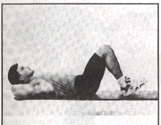
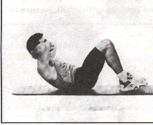
1. Abdominal Curl-
-
Targets: Back pain, potbelly, abdominal muscles.
Lie on your back with your knees bent, fingers lightly touching ears. You
can place your hands behind your head as long as you don't use them to
pull your head forward. Slowly curl upper torso only until shoulders leave
the floor. Hold for a few seconds, go down and repeat, inhaling as you
go down. If this is too difficult, keep your arms at your sides.
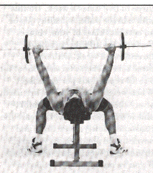
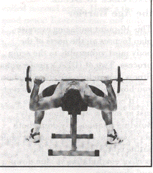
2. Bench Press-
-
Targets: upper-body strength, posture. Lie
on an exercise bench with your knees bent so your feet are flat on the
floor. Grasp dumbbells or a barbell (if you're using a barbell, be sure
to have partner to spot you) with your hands slightly more than shoulder-width
apart. Slowly lower them to your chest. Press the dumbbells up until arms
are fully extended, with elbows almost locked. Repeat.
3. Arm Curl-
-
Targets: Osteoporosis (forearm), biceps strength.
Hold the barbell with both hands, palms facing up. Stand with the bar at
arm's length against your upper thighs. Curl the bar up in a semicircular
motion until your forearm touches your biceps. Keep your upper arms close
to the sides of your body. Lower the bar slowly to starting position using
the same path.
4. Seated Quadriceps Extension-
-
Targets: Mobility, knee stability and padding.
Sit in a "leg machine" with feet under pads. Straighten knee out, then
lower food back down. Do 8 to 10 times. Switch to other leg. (Use ankle
weights if you don't have a machine.)
5. Bent-over Dumbbell Row-
-
Targets: Posture, back flexibility, osteoporosis.
Put feet close together and place the dumbbells outside of each foot. Bent
forward and grasp dumbbells. Keep knees slightly bent and torso parallel
to floor. Pull dumbbells straight up to the sides of your chest. Keep your
head up and your back straight, and don't let the weight touch the floor.
6.Seated Barbell Calf Raise-
-
Targets: Shin splints, knee stability, calf
strength. Place a raised object on floor about 12 inches away from the
end of the bench. Sit at the end of bench. Hold barbell on upper thighs
(use a pad) about 3 inches above knees. Place balls of feet on object and
raise up on toes as high as possible. Hold position momentarily, then return
slowly to starting position.
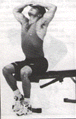
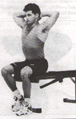
7. Neck Exercise-
-
Targets: posture. Sit on bench with back straight,
head up. Place both hands on forehead. Push head back as far as comfortable
while resisting with neck muscles. Use only moderate resistance. At low
position, push head back up in semicircular motion as far as comfortable.
Resist with neck muscles. Do 10 repetitions. Then place hands on back of
head and repeat movement in reverse.
8. Seated Side Lateral Raise-
-
Targets: upper-body straight, posture, rotator-cuff
protection. Sit on the end of a bench with your feet firmly on the floor.
Hold dumbbells with your palms in, arms straight down at sides. Raise the
dumbbells in a semicircular motion a little above shoulder height. Pause
for a moment, then lower to starting position using the same path. keep
arms slightly bent.
9. Hamstring Curl (with partner)-
-
Targets: knee protection, mobility, muscle
balance. Lie face down on a "leg machine," holding on to front of the machine.
Curl your legs up until the calves touch the upper parts of your thighs.
Return to the down position and repeat. If you don't have a machine, a
partner can provide resistance.
10. Hip Flexor-
-
Targets: osteoporosis (hip bone). Place ankle
strap (or weight) on left ankle. If you want, you can hold on to a waist-high
object in front of you, for balance. Keeping leg straight, knee slightly
bent, raise left leg until thigh is parallel to floor. Return to starting
position. Keep your back straight.
Martial Arts
Martial arts literally means the arts of war and
in specific usage refers to various techniques of hand-to-hand combat -
most notably karate
- developed in the Far East. The martial arts can be an ideal hobby for
anyone who wants to gradually improve himself, learn new skills,
increase body flexibility and learn the self defense. One of the nice things
about it - is that when you look back on what you have accomplished after
a while, you will be astonished to realize that you are now able to do
thing that had previously seemed completely beyond your ability, or even
potential. And that kind of revelation can be wonderfully inspiring, for
if you can now do things with your body that you would not have dreamt
possible a year before, imaging the potential for achievements of the mind.
Flexibility
The martial arts are supremely effective for increasing
flexibility in virtually every part of the body. Typically, at least one-third
of the entire class time may be given over to warm-up movements. Every
part of the body, from neck to ankles, comes in for its own share of full-range
exercise. When you're just beginning, these warm-ups should naturally be
done gently. A good rule is to just barely touch the point of discomfort,
but never go beyond it. If you practice three times a week, you will notice
a definite improvement in flexibility after about a month, and after three
or four months, you will probably be amazed at the progress you have made.
Just don't rush things, and learn to ignore the exhortation that your instructor
may be offering (and that are more appropriate for a 17-year-old than they
are for you).
Relief of Low Back Pain
Most Chronic low back pain is the result of muscle
tension, particularly in the area extending from the lower back to the
back of knees. It's just this area that is stretched and relaxed the most
by the martial arts. Leg raises (done in warm-ups) and kicks of all kinds
are
particularly helpful in achieving the desired results. The Korean martial
art known asTae
Kwan Doprobably
involved more kicking than any other form, but there is sufficient leg
action in Japanese, Chinese and Okinawan martial arts to do the job nicely.
Again, take it easy at first. Be patient. After one or two months, you
should notice a definite improvement in chronic stiffness and a reduction
in twinges of pain.
Strengthening the abdominal Wall
The abdominal strength and tone of martial arts
practitioners is phenomenal, yet they do not sit-ups. instead, they work
their abdominal muscles by endless repetitions of leg raises and kicks,
which call the stomach muscles into play. Developing stronger muscular
support up front for your internal organs is - as you may know - a very
good means of helping to alleviate low back pain.
Exercise
Therapy
Designing
a Personalized Exercise Program
|